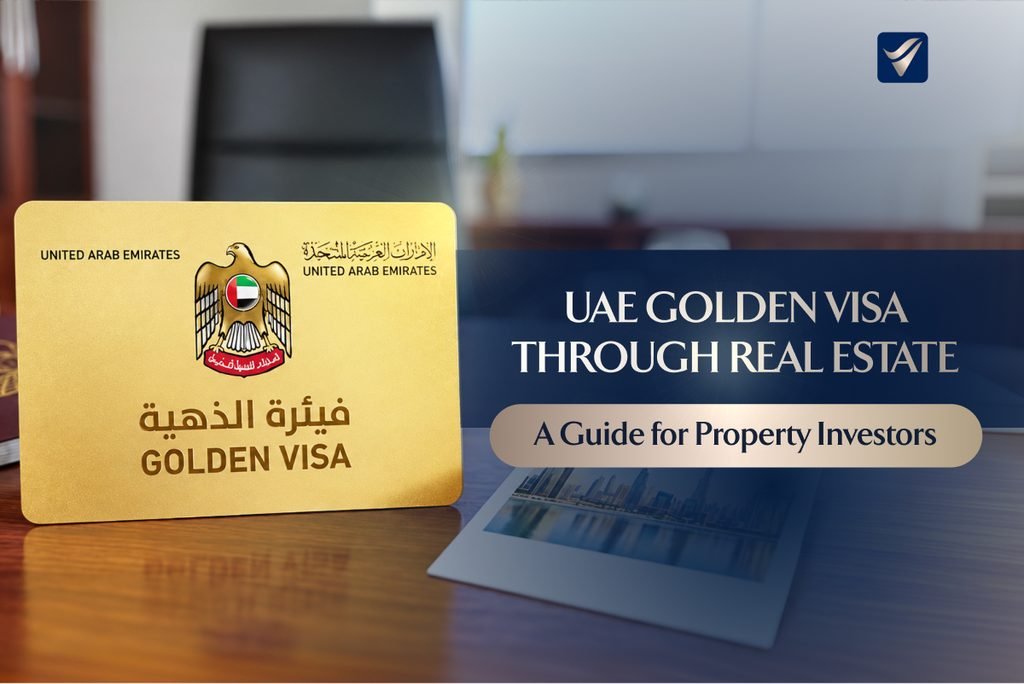
If you are buying property in Dubai partly to secure long-term UAE residency, the headline requirement is straightforward: real estate investors can qualify for a 10-year UAE Golden Residency by owning one or more qualifying properties with a total value of at least AED 2 million.
The decision behind that rule is less straightforward.
An AED 2 million price tag does not, by itself, determine whether a particular purchase is suitable for a Golden Visa application. Investors also need to consider how the property’s value is recognised, whose name appears on the ownership documents, whether the property is jointly owned, how it is financed, whether it is completed or off-plan, and how future disposal could affect the residency.
For investors, founders, business owners and internationally mobile families, the better question is not simply:
“Which property will get me a Golden Visa?”
It is:
“How do I choose and structure a Dubai property investment that makes commercial sense while also meeting the current Golden Residency requirements?”
That distinction matters. Residency eligibility can add value to a property decision, but it does not automatically make the property a good investment.
What Is the Dubai Property Golden Visa?
The property Golden Visa is the real estate investor category of the UAE’s Golden Residency programme. It provides eligible property investors with a 10-year UAE residence permit.
It is not UAE citizenship and should not be confused with conventional permanent residency.
Golden Residency allows eligible holders to live in the UAE without relying on a traditional residency sponsor and provides wider benefits relating to work, investment and family residence.
Is The Golden Visa A Dubai Visa Or A UAE Visa?
The Golden Residency framework is federal and applies across the UAE.
Dubai property investors, however, must also meet Dubai-specific property and application requirements. In practice, the Federal Authority for Identity, Citizenship, Customs and Port Security oversees the federal residency framework, while Dubai residency and property documentation involve GDRFA Dubai and the Dubai Land Department.
That distinction is worth understanding. Throughout the rest of this guide, references to “current rules” or “current requirements” refer to the applicable official UAE and Dubai guidance.
Dubai Golden Visa Property Requirements at a Glance
| What investors want to know | What currently applies |
| How much property is required? | At least AED 2 million in qualifying real estate. |
| Does it have to be one property? | No. Multiple qualifying properties can be combined to meet the threshold. |
| Does the purchase have to be fully in cash? | No. Qualifying property financed through an approved local bank can be considered. |
| Can off-plan property qualify? | Yes, subject to the relevant developer, registration, value and documentation requirements. |
| Can jointly owned property qualify? | Yes, but the applicant’s individual ownership share must satisfy the applicable qualifying value. |
| What if the property was bought for less than AED 2 million? | An official valuation may support eligibility if the property’s recognised current value meets the threshold. |
| Are extra documents needed for mortgages or off-plan purchases? | Usually, yes. Bank, developer or payment documents may be required depending on the transaction. |
| Can family members be sponsored? | Yes. Eligible Golden Visa holders can sponsor qualifying family members. |
| Is ready property better than off-plan? | Neither is automatically better. Both can potentially qualify, so the investment decision should be assessed separately. |
| Is one AED 2 million property better than several properties? | Not necessarily. Both approaches can work, depending on the investor’s strategy. |
In this guide, qualifying value means the property value recognised for Golden Residency eligibility. It should not automatically be assumed to mean an asking price, portal estimate or informal broker valuation.
How Much Property Do You Need for a Dubai Golden Visa?
The current minimum is AED 2 million in qualifying real estate. One property isn’t mandatory; you can use more than one qualifying property to meet the threshold.
That gives investors more flexibility than the common interpretation that they must buy a single AED 2 million apartment.
An investor could potentially use several qualifying assets instead of allocating the entire amount to one higher-value property, provided the ownership and documentation requirements are met.
From an investment perspective, however, several properties are not automatically better.
A portfolio may diversify location or tenant exposure, but it can also mean more transactions, service charges, property management responsibilities and future exit decisions.
The visa rule tells you what may qualify. It does not tell you which structure is the better investment.
Does Buying an AED 2 Million Property Guarantee a Golden Visa?
No. Reaching the AED 2 million property threshold is an important eligibility requirement, but it does not by itself guarantee approval.
The applicant must also satisfy the relevant ownership, documentation, insurance and procedural requirements.
Depending on the circumstances, supporting evidence may be required for:
- registered ownership;
- qualifying property value;
- the applicant’s individual ownership share;
- mortgage financing;
- off-plan or developer payments;
- health insurance;
- identity and residence documentation.
The practical implication is simple:
Do not treat “AED 2M+” in a property advertisement as equivalent to confirmed Golden Visa eligibility.
The property, ownership structure and supporting documentation still need to satisfy the current requirements.
Can Several Properties Be Combined to Reach AED 2 Million?
Yes. You can meet the threshold through one or more qualifying properties.
This can be particularly relevant to investors who already own Dubai real estate.
For example, an investor holding two qualifying properties with a recognised combined value above AED 2 million may not necessarily need to buy a separate AED 2 million property purely for residency purposes.
The ownership records and qualifying value of those properties must still meet the relevant application requirements.
Does Current Market Value Count If the Property Was Bought for Less Than AED 2 Million?
It can, provided the current value is recognised through the appropriate official valuation process.
This can be relevant to an owner who originally purchased a Dubai property below AED 2 million but whose asset has subsequently appreciated beyond the threshold.
If eligibility relies on today’s market value, you may need an official property valuation to establish that value.
An online portal estimate, current asking price or informal broker opinion should not be treated as sufficient evidence on its own.
If you are relying on appreciation to reach the threshold, confirm the required Dubai Land Department valuation process before applying.
Can Jointly Owned Property Qualify?
Yes, but the applicant’s individual ownership share matters.
For a jointly owned Dubai property, the value attributed to the applicant’s share must meet the applicable qualifying requirement.
For example, suppose two unrelated investors purchase an AED 3 million property on a 50:50 basis.
The property itself is worth more than AED 2 million, but each investor owns a share worth AED 1.5 million. The total property value therefore does not automatically mean that both owners independently meet the property threshold.
This is why you should review ownership percentages before registering a purchase if Golden Residency is one of your objectives.
What if a husband and wife own the property together?
Spousal co-ownership can be accommodated, but couples should not assume that one jointly owned property automatically results in two independent Golden Visas.
Marriage documentation may be required when spouses jointly own a property.
The proposed ownership percentages, principal applicant and family sponsorship structure should therefore be considered before registration.
This is especially important when the combined property value exceeds AED 2 million, but neither spouse’s individual share meets the required threshold.
Can a Mortgaged Dubai Property Qualify for the Golden Visa?
Yes. A mortgage does not automatically disqualify the property, and a cash purchase is not mandatory.
Current rules allow qualifying real estate financed through an approved local bank.
However, the financing must still be properly documented. A mortgaged applicant may need documents such as a bank NOC and mortgage statement.
Investors should therefore distinguish between:
- the property’s total value;
- the outstanding mortgage;
- their ownership position;
- the supporting documents available.
The question is not simply whether the property has a mortgage.
The more important question is whether the property and financing arrangement meet the applicable requirements and can be evidenced correctly.
Has The Mortgage Rule Changed?
Yes. Earlier rules applied a higher property threshold and placed stricter limits on loan-financed investments.
Current rules use the AED 2 million threshold and allow qualifying real estate financed through an approved local bank.
For investors researching the Golden Visa online, this is an important reminder to check when an article or government update was published rather than assuming older requirements still apply.
Can an Off-Plan Property Qualify?
Yes. Off-plan property can qualify under the current framework, subject to the applicable conditions.
That does not mean every AED 2 million off-plan property being marketed in Dubai should automatically be described as “Golden Visa eligible”.
Before relying on an off-plan investment for residency purposes, check:
- the project’s and developer’s relevant status;
- how the property is registered;
- the documentary evidence available;
- the payment and financing structure;
- the application requirements in force when you intend to apply.
Investors should also separate the residency decision from the investment decision.
A development can meet Golden Residency requirements but still be unsuitable for a particular investor because of its pricing, completion timeline, future competing supply, rental outlook, or resale potential.
What Documents Are Needed for a Dubai Property Golden Visa?
The core documents establish three things:
who the applicant is, what property they own, and whether that property meets the qualifying requirements.
The application file may include:
Generally Required Or Commonly Required
- passport;
- personal photograph;
- property ownership documents;
- evidence of qualifying property value;
- valid health insurance.
Required Depending On The Property Or Applicant
- bank NOC or mortgage documents for financed property;
- developer or payment documentation where applicable;
- official property valuation where eligibility relies on current market value;
- marriage certificate for relevant spouse co-ownership cases;
- existing Emirates ID or residence documentation where applicable.
Because a mortgaged property, jointly owned property, and off-plan purchase can each require different evidence, investors should check the current document list when preparing the application rather than relying on a generic checklist.
How Does the Dubai Property Golden Visa Application Process Work?
In practical terms, the process involves confirming eligibility, proving the property’s qualifying value and ownership, submitting the necessary documents and completing the remaining residency formalities.
Step 1: Confirm that the property qualifies
Review:
- total recognised property value;
- whether one or several properties will be used;
- the applicant’s ownership share;
- mortgage position;
- whether the property is ready or off-plan.
Step 2: Confirm how the property value will be proven
Depending on the circumstances, this may involve property ownership records, a property status statement or an official valuation.
If the investment only reaches AED 2 million based on current market value rather than the original registered value, establish the recognised valuation process before applying.
Step 3: Prepare any additional documents
A mortgage, joint ownership structure, developer purchase, or valuation-based application may require additional documents.
This is why you should review the paperwork against the investment’s actual structure, rather than treating it as a standard file for every applicant.
Step 4: Submit through the appropriate application channel
Dubai provides digital and approved service-centre channels for property investor Golden Residency applications.
Applicants who are outside the UAE may also have an entry route that allows eligible Golden Residency candidates to enter the country and complete the necessary procedures.
The appropriate route therefore depends on the applicant’s circumstances.
Step 5: Complete the remaining residency formalities
Once the application progresses, the applicant completes any remaining identity, insurance and residence procedures that apply to their case.
Operational requirements can change, so always confirm the final application process and government charges at the time of filing.
What Are the Main Benefits of a Dubai Golden Visa?
For investors, entrepreneurs and business owners, the main benefits of Dubai Golden Visa residency include long-term residence, greater independence from a conventional employment sponsor, family sponsorship and more flexibility for people who spend significant time outside the UAE.
10-Year UAE Residency
Eligible real estate investors can receive a 10-year Golden Residency.
The longer validity period can provide greater continuity for people building businesses, holding investments or establishing a long-term family base in the UAE.
However, the 10-year validity should not be interpreted as meaning that the underlying eligibility conditions no longer matter. Changes to the qualifying property or ownership structure may affect the residency and should be considered before a sale or restructuring.
Residency Without a Conventional Employment Sponsor
Golden Residency allows eligible holders to reside in the UAE without relying on a traditional employment sponsor.
For founders, entrepreneurs and investors, this can provide greater independence by separating personal residency from one specific employer relationship.
Family Sponsorship
Eligible Golden Visa holders can sponsor qualifying family members, including spouses, children and parents, subject to the applicable requirements.
Domestic workers may also be sponsored under the relevant UAE procedures.
For internationally mobile families, this can make the Golden Visa particularly useful when establishing a longer-term base in the UAE.
Greater Flexibility to Spend Time Outside the UAE
Golden Residence holders benefit from greater flexibility to remain outside the UAE than holders of certain conventional residence visas.
The usual 180-day absence restriction that applies to some other residence categories does not apply in the same way to Golden Residence holders.
This can be especially relevant to business owners, executives and investors who regularly divide their time between the UAE and other countries.
Flexibility to Work, Invest and Conduct Business
Golden Residency allows holders to live, work, study and invest in the UAE.
However, residency status does not replace every separate employment, professional or business licensing requirement. Certain professions, employment arrangements and commercial activities may still require their own permits or licences.
For investors and business owners, the practical benefit is greater residency flexibility—not an exemption from the regulatory requirements that apply to the activity itself.
What Happens If You Sell the Property Linked to the Golden Visa?
Do not assume the Golden Visa will remain unaffected if the qualifying property is sold.
Current Dubai requirements place importance on continuity of qualifying property ownership during the Golden Residency period.
That makes exit planning particularly important.
Before selling, transferring or materially restructuring a property being relied upon for Golden Residency, the investor should confirm the residency implications before completing the transaction.
This is especially relevant for investors whose property strategy relies on short holding periods, restructuring or frequent portfolio rotation.
Is One AED 2 Million Property Better Than Several Properties?
Not necessarily. This is primarily an investment decision rather than a visa decision.
One higher-value property may provide:
- simpler management;
- one transaction and exit;
- exposure to a particular prime market segment.
Several properties may provide:
- diversification across locations;
- different tenant profiles;
- flexibility in portfolio construction.
But a larger portfolio can also mean additional transaction costs, service charges, management responsibilities and individual exit decisions.
The better structure depends on the investor’s objectives rather than the residency threshold alone.
Is Ready or Off-Plan Property Better for a Golden Visa Investor?
Neither is automatically better. Both can potentially fit the Golden Residency framework, but they serve different investment objectives.
A ready property may suit someone prioritising:
- immediate possession;
- observable building quality;
- current rental evidence;
- earlier leasing potential.
An off-plan property may suit someone prioritising:
- staged payment structures;
- newer developments;
- a longer investment horizon;
- entry into a project before completion.
For off-plan property, investors should also consider developer execution, construction timelines, future supply and resale demand.
For ready property, factors may include existing tenancy, service charges, building condition and actual transaction and rental evidence.
Golden Visa eligibility should therefore be one part of the comparison rather than the reason to choose one category over the other.
Which Dubai Property Should a Golden Visa Investor Buy?
There is no particular neighbourhood that becomes “more Golden Visa eligible” because it is prime, waterfront or luxury.
The residency test is about:
- qualifying property value;
- ownership structure;
- documentation.
The investment test is about whether the property itself suits the investor.
A commercially focused assessment should consider:
- location and micro-location;
- price relative to comparable properties;
- ready versus off-plan status;
- service charges and ownership costs;
- tenant demand;
- realistic rental income;
- future competing supply;
- developer or building quality;
- resale liquidity;
- financing costs;
- intended holding period;
- the asset’s role within the wider portfolio.
For investors considering securing a UAE Golden Visa through real estate investment, a more disciplined approach is to identify a property that makes sense first, then confirm that the ownership and documentation can also support the residency objective.
A Practical Test Before Buying: Would You Still Want the Property Without the Golden Visa?
This is one of the simplest ways to avoid allowing residency eligibility to distort an investment decision.
A property priced slightly above AED 2 million does not become a stronger investment simply because it crosses the Golden Visa threshold.
Before committing additional capital purely to reach that number, ask what the extra money is actually buying:
- a stronger location?
- more usable space?
- greater scarcity?
- stronger tenant demand?
- better resale liquidity?
- a higher-quality development?
- or simply a higher purchase price?
If the property’s main attraction disappears when the Golden Visa benefit is removed, residency may be driving the investment decision too much.
Golden Visa Property Checklist Before You Buy
Before signing a sale and purchase agreement or reserving an off-plan unit, work through these questions.
1. Is the recognised property value at least AED 2 million?
Do not rely solely on a marketing price or informal valuation.
2. Who will own the property?
Establish whether ownership will sit with one applicant, spouses or other investment partners.
3. What is each person’s ownership share?
This becomes particularly important in joint ownership.
4. Is the property mortgaged?
If so, confirm that the financing structure and supporting bank documents meet the applicable requirements.
5. Is the investment off-plan?
Confirm the relevant developer, registration, payment and application documentation before relying on it for residency.
6. Will family sponsorship be required?
Consider the principal applicant and dependent structure alongside the proposed property ownership.
7. What happens when you eventually want to sell?
Do not plan an exit without considering how a sale or ownership transfer could affect the residency.
8. Would the property still make sense without the Golden Visa?
Assess the investment on ordinary property fundamentals, not just residency eligibility.
Final Thoughts
The Dubai Golden Visa can be a valuable additional benefit of property ownership, particularly for investors, entrepreneurs and internationally mobile families looking for a longer-term base in the UAE. But treat the AED 2 million threshold as an eligibility consideration—not a reason to compromise on investment quality.
The stronger approach is to start with the property itself. Consider the location, entry price, developer or building quality, rental demand, ongoing ownership costs, resale liquidity and your intended holding period. Once the investment case makes sense, you can then review ownership, financing, and documentation alongside the current Golden Residency requirements.
This is particularly important when the purchase involves joint ownership, a mortgage, an off-plan development or several properties being combined to meet the qualifying value. Decisions made at the buying stage can influence both the investment outcome and how straightforward the residency process may be later.
How Vista Properties Can Help
At Vista Properties, we help investors look beyond the AED 2 million headline and assess Dubai real estate against their broader investment objectives.
Depending on what you are trying to achieve, this can include:
- identifying ready and off-plan opportunities within your investment range;
- comparing locations, developments and property types rather than focusing on price alone;
- evaluating whether one higher-value asset or a broader property portfolio better suits your strategy;
- considering rental potential, holding period, resale prospects and overall market positioning;
- helping you understand how the proposed ownership and financing structure fits into the property purchase; and
- ensuring Golden Residency considerations are factored into the property search without allowing the visa itself to drive the entire investment decision.
Golden Visa eligibility and approval ultimately remain subject to the latest requirements of the relevant UAE authorities. But choosing the right property—and understanding the structure before you buy—can help avoid unnecessary complications later.
Considering a Dubai property investment with Golden Residency as part of your plans? Contact Vista Properties for a free consultation to discuss your objectives and explore suitable real estate opportunities.